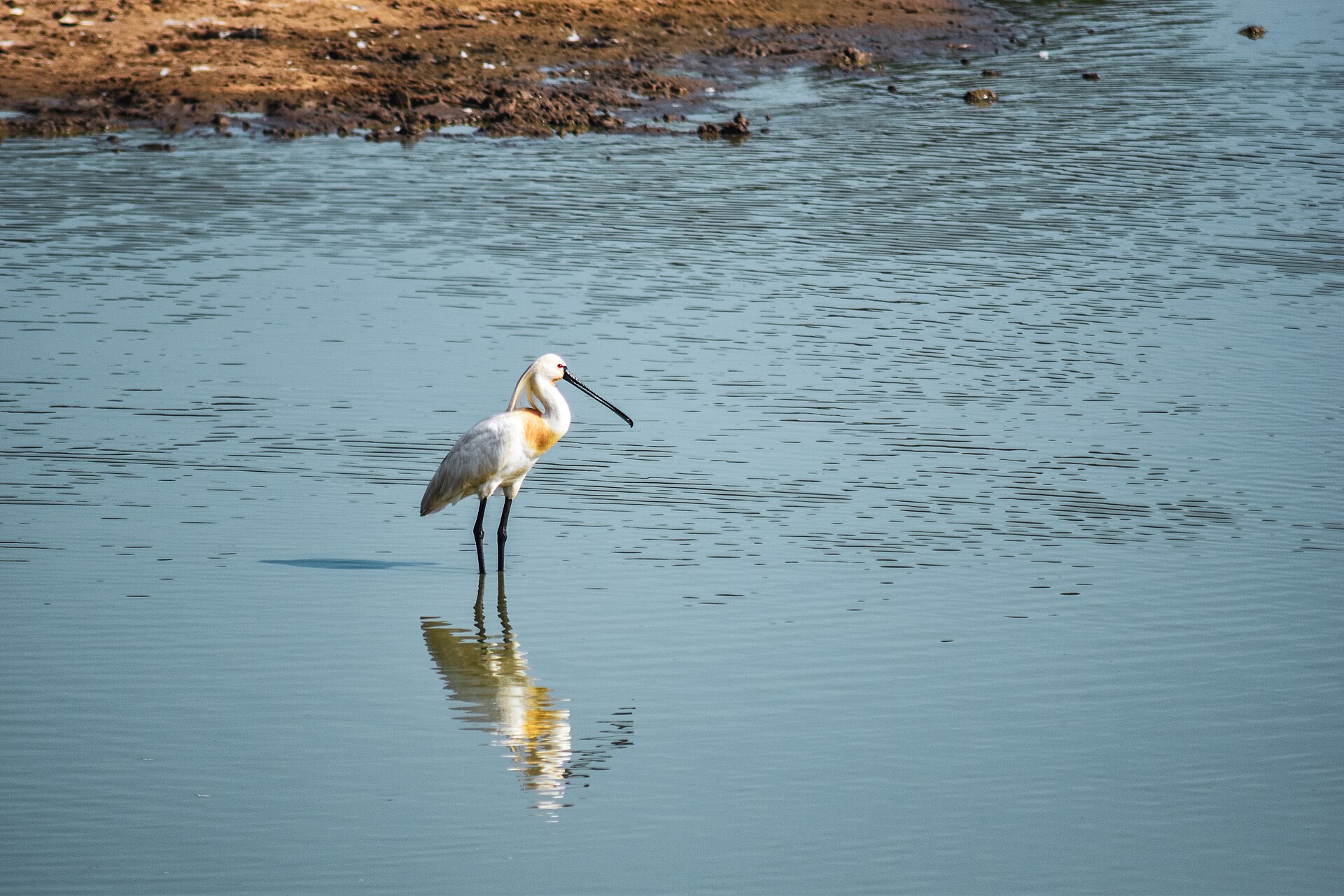
Eurasian spoonbill
Platalea leucorodiaA tall white wader with a bill like a long, flat spoon. Watch one sweep it through the shallows of Yala's lagoons and it's hard to look away.
Eurasian spoonbill wading Platalea leucorodia Eli Solidum · CC BY-SA 4.0
- Latin name
- Platalea leucorodiaEurasian spoonbill
- Status
- Least ConcernIUCN Red List
- Size
- 80–93 cm longwingspan up to ~1.3 m
- Diet
- Small fish, shrimpand aquatic insects
- Where in Yala
- Lagoonsshallow, brackish water
Overview
Yala's coastal lagoons are full of wading birds, and the spoonbill is one of the most elegant.
The spoonbill feeds by touch, not sight. It wades through shallow water with its bill slightly open and sweeps it from side to side. When the sensitive tip touches a fish or shrimp, the bill snaps shut. Groups often feed together, moving across the lagoon in a loose line.
Adults in breeding plumage grow a shaggy crest and a yellowish-buff patch on the chest, which you can see in the photograph above. Outside the breeding season they're plain white with a black bill.
How to spot one.
Scan the shallow lagoons
Spoonbills feed in water only ankle- to knee-deep. Look for white birds moving their heads from side to side.
Go when the lagoons are full
After the rains, the lagoons and salt flats fill up and wetland birds gather in larger numbers.
Bring binoculars
Lagoon birds are often some distance from the track. Our jeeps carry binoculars, and a long lens helps.
Look for mixed flocks
Spoonbills often feed alongside painted storks, ibises and egrets, so one white flock can hold several species.
At a glance.
- Active
- By day, often feeding in groups
- Feeding
- Sweeps its bill side to side, by touch
- Nest
- Colonies in trees or reed beds
- Breeding look
- Shaggy crest and buff chest patch
- Range
- Lagoons and wetlands of the dry zone
- Spot it by
- All-white, long legs, spoon-shaped bill
The best months.
Lagoon birds are most numerous from about November to March, when the rains fill the wetlands and migrant birds arrive. In the driest months, fewer birds stay on the shrinking lagoons.
Three things to remember.
Fishing by feel
Spoonbills catch prey by touch, so they can feed in muddy water or even at night.
Born without a spoon
Chicks hatch with short, straight bills. The spoon shape grows as they mature.
Quiet birds
Adults are mostly silent away from their breeding colonies.
How we watch them.
- We stay on the track and don't drive toward feeding flocks.
- No flushing birds for flight photos.
- Voices low near the water's edge.
- We keep away from nesting colonies.
More of Yala's wildlife.
The animals our guests ask about most, and how to find them.
Go looking for one. We know where.
Tell us your date and where you're staying. We'll confirm your jeep, your tracker and your pickup time, usually within a few hours.
- No deposit, pay after your safari
- Free cancellation up to 24 hours before
- Park tickets bought for you, no queue
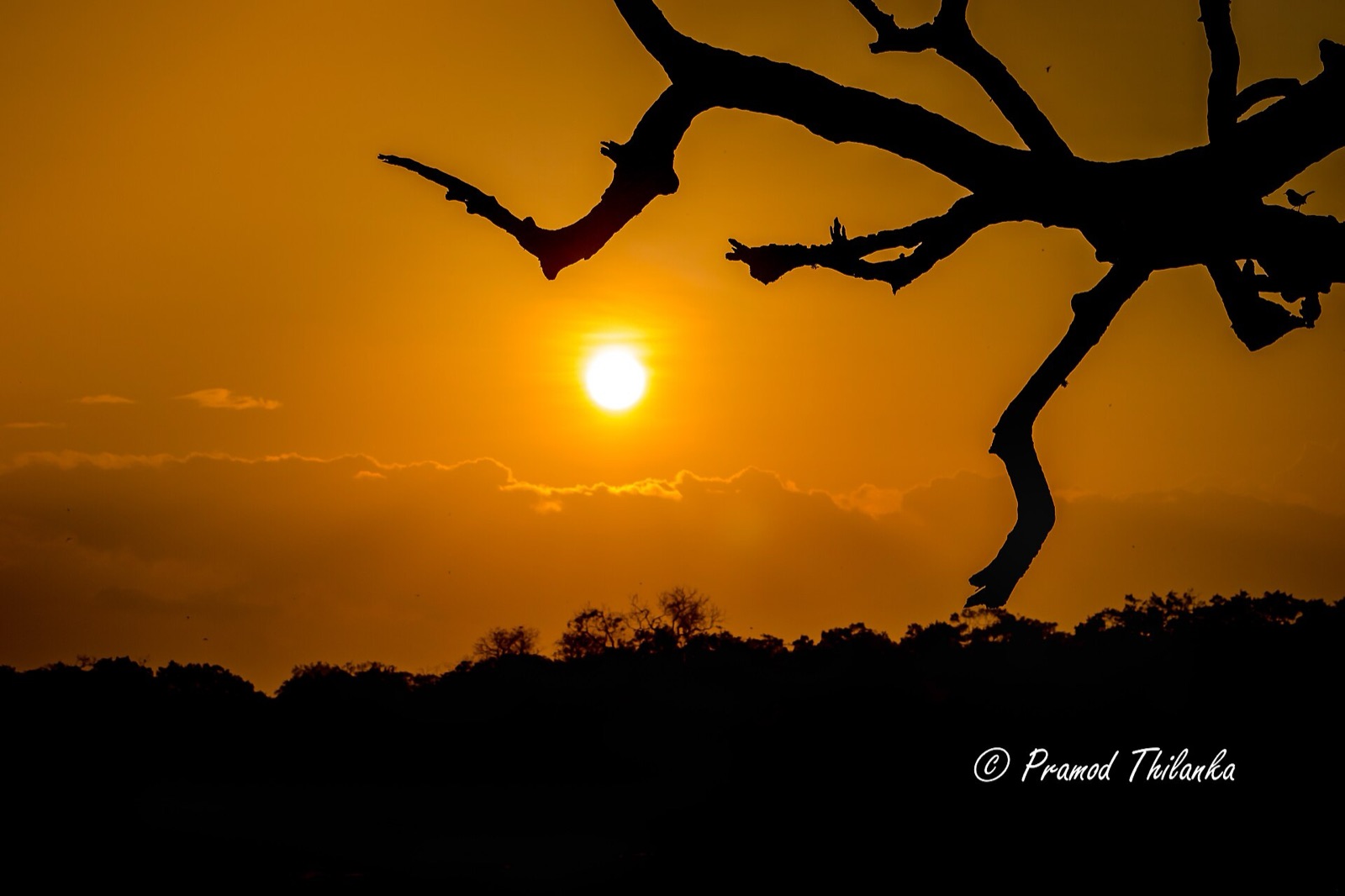
Sunset over Yala Pramod Thilanka · CC BY-SA 4.0
Book a safari
We'll reply on email or WhatsApp, usually within a few hours.